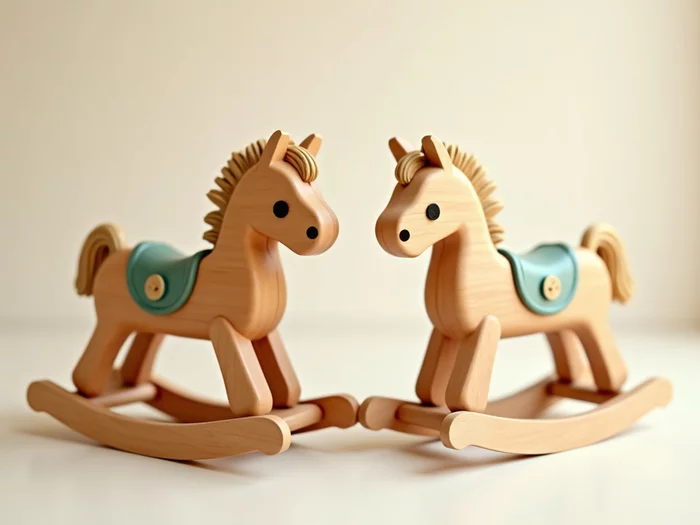
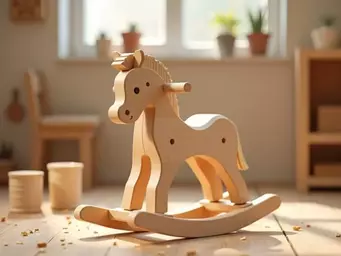
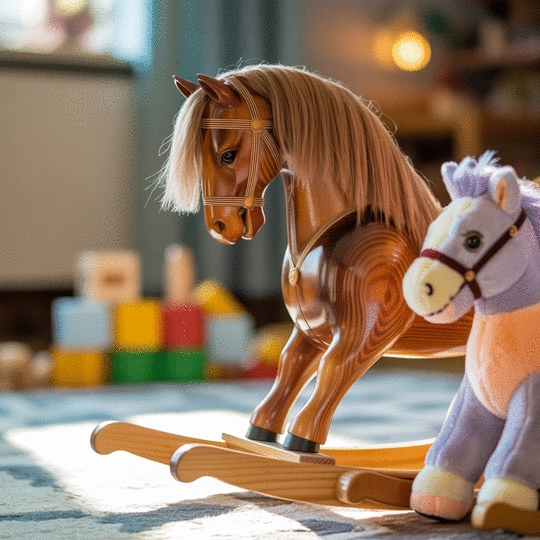
As you navigate the exciting world of choosing a rocking horse, understanding the differences in durability and safety between wooden and plastic options is essential. This guide will help you make an informed decision that suits your family's needs.
What You Will Learn
Wooden rocking horses offer superior durability, often lasting for generations with proper care.
Plastic rocking horses are typically lighter and more affordable but may require frequent replacements.
Safety features in wooden rocking horses include stable designs and non-toxic finishes that minimize injury risks.
Plastic rocking horses can present safety concerns if made from lower-quality materials; always check for safety certifications.
Understanding toy safety standards, such as EN 71, ensures you choose a safe option for your child.
Environmental factors and your child's play habits should be considered when selecting the right rocking horse.
Comparing Rocking Horses: Durability & Safety
When choosing a rocking horse, durability and safety are paramount. Below is a comparison to help you make an informed decision between wooden and plastic options.
Comparing Durability: Wooden Rocking Horses vs Plastic
When choosing a rocking horse, durability is a crucial factor to consider. After all, you want something that can withstand the test of time, playful adventures, and, let's face it, the occasional tumble! In this section, we'll explore the inherent qualities of wooden and plastic rocking horses, examining their material strengths and expected lifespans.
Understanding Material Strength and Longevity
Wooden rocking horses are often celebrated for their natural durability. Crafted from solid timber, they possess the strength required to endure years of play. With proper care, a wooden horse can last through multiple generations, becoming a treasured family heirloom. On the other hand, plastic rocking horses offer their own set of advantages. They are usually lighter, making them easier to move around, but their longevity can vary greatly depending on the quality of the plastic used.
Wooden Rocking Horses: Typically last for years, can be repaired or refinished.
Plastic Rocking Horses: May need to be replaced more frequently due to wear and tear.
Considerations: Quality of materials and construction methods play a significant role in durability.
In terms of longevity, wooden rocking horses shine as they can endure rough play while maintaining their aesthetic appeal. However, it's essential to note that high-quality plastic options are also available that can provide decent durability and withstand typical childhood activities.
Real-World Durability Testing Results
Understanding how these materials hold up under pressure is vital. In various durability tests, wooden rocking horses consistently show superior performance against stress and impact. For instance, they tend to withstand heavier weight and rough handling without significant damage. In contrast, plastic rocking horses can crack or chip under similar conditions, especially if they're made from lower-grade materials.
Wooden horses often pass wear tests with flying colors, maintaining their structure.
Plastic models may show signs of aging earlier, particularly in outdoor settings.
Factors affecting durability include exposure to sunlight, moisture, and general usage.
From my experience at Rocking Horse Reviews, I've seen firsthand how families appreciate the resilience of wooden rocking horses. They often become cherished favorites that stand the test of time, both in durability and sentimental value.
Safety Considerations: Which Option is Safer for Children?
As parents, we all want to ensure that our children are safe while playing. It’s essential to evaluate the safety aspects of both wooden and plastic rocking horses thoroughly. Let’s delve deeper into the safety features of wooden rocking horses and the potential hazards associated with their plastic counterparts.
Safety Features of Wooden Rocking Horses
Wooden rocking horses often come with features that enhance their safety and stability. Many designs include broad bases that prevent tipping, sturdy, rounded edges to minimize injury risk, and a weight distribution that keeps them grounded during play. Furthermore, manufacturers typically adhere to strict UK safety standards, ensuring that the materials used are non-toxic and child-friendly. For additional information on general toy safety, you can consult resources from the U.S. Consumer Product Safety Commission.
Non-toxic finishes: Many wooden rocking horses are treated with safe paints or stains.
Stable design: The broad base prevents tipping, providing a safer ride.
Rounded edges: Reduces risk of scratches or cuts during play.
These safety features contribute to a sense of security for parents, knowing their children are playing with a well-crafted toy that meets safety regulations.
Evaluating the Safety of Plastic Rocking Horses
While plastic rocking horses can be fun and colorful, they come with their own set of safety concerns. For example, some models may have sharp edges or are made from lower-quality materials that can degrade over time, posing potential hazards to children. It’s crucial to choose plastic rocking horses that have undergone rigorous safety testing and have the appropriate certifications. To learn more about child safety and injury prevention, the CDC's NIOSH offers valuable insights.
Sharp edges: Some cheaper plastic models may have rough or sharp edges.
Material integrity: Look for high-quality, durable plastics that won't crack easily.
Safety certifications: Verify that the toy meets relevant safety regulations before purchase.
When selecting a plastic rocking horse, it’s essential to do your research and opt for reputable brands that prioritize safety, ensuring your child's playtime is enjoyable and secure.
Understanding Toy Safety Certifications and Standards
In the UK, all toys must comply with specific safety regulations, including the EN 71 standards. This regulation ensures that all toys, including rocking horses, are tested for safety and durability. It's a relief for parents to know that both wooden and high-quality plastic rocking horses are tested for harmful substances, structural integrity, and age appropriateness. Further guidance on safe play environments for children can be found through resources like HealthyChildren.org.
EN 71: Key standard for toy safety in Europe.
ISO certifications: Further ensures product safety and reliability.
Manufacturer labels: Always check for safety certifications on the product.
By understanding these certifications and standards, you can shop confidently, knowing that your chosen rocking horse is safe for your little one.
Consumer Insights: The Choice is Yours!
As you consider the durability and safety of wooden versus plastic rocking horses, we'd love to know what drives your decision-making. What factors do you prioritize the most when selecting a rocking horse for your child? Is it durability, safety features, or perhaps the aesthetics? Share your thoughts with us!
Frequently Asked Questions About Rocking Horses
Q: What is the main difference in durability between wooden and plastic rocking horses?
A: Wooden rocking horses are generally more durable and can last for generations with proper care, often becoming family heirlooms. Plastic rocking horses, while lighter and more affordable, may require more frequent replacement depending on the quality of the material.
Q: Are wooden rocking horses safer than plastic ones?
A: Wooden rocking horses often feature stable designs, rounded edges, and non-toxic finishes, which enhance safety. Plastic rocking horses can also be safe if they are made from high-quality materials and have appropriate safety certifications to prevent issues like sharp edges or material degradation. Always check for safety certifications regardless of the material.
Q: What safety certifications should I look for when buying a rocking horse?
A: In the UK, all toys must comply with EN 71 standards, which certify safety and durability. Looking for ISO certifications and checking manufacturer labels for these standards will help ensure your chosen rocking horse is safe.
Q: Can wooden rocking horses be repaired?
A: Yes, wooden rocking horses can often be repaired and even refinished, extending their lifespan significantly. This is a major advantage over plastic models, which are harder to repair if they crack or chip.
Q: What factors should I consider when making a decision?
A: Key factors include child safety features, environmental factors (indoor/outdoor use), your budget, your child's play habits, and your willingness for maintenance. Considering these points will help you choose a rocking horse that best fits your family's needs.
Summarizing Durability and Longevity Insights
When it comes to choosing between wooden and plastic rocking horses, durability and longevity are crucial factors to consider. Each material has its strengths that cater to different needs, making it important to weigh these aspects carefully. Here’s a quick recap of what we’ve discussed:
Wooden rocking horses are typically more durable, with the potential to last for generations if properly cared for.
Plastic rocking horses often come at a lower initial cost, but may require more frequent replacements due to wear and tear.
Both materials have safety features; however, wooden rocking horses generally provide better stability.
Maintenance for wooden horses involves occasional polishing and inspections, while plastic options primarily need simple cleaning.
Ultimately, the choice between these two materials will also depend on how they fit into your family's lifestyle and values. At Rocking Horse Reviews, I always recommend thinking about your child’s play habits and how often you want to engage in upkeep!
Making an Informed Decision for Your Child’s Rocking Horse
As you navigate the exciting world of rocking horses, it's essential to reflect on what matters most for your family. Consider factors such as:
**Child safety**: What safety features are most important to you?
**Environmental factors**: Will the rocking horse be used indoors, outdoors, or both?
**Budget**: What is your budget for an investment that encourages play and creativity?
By evaluating these points, you can make a well-rounded decision that aligns with your child's needs and enhances their playtime experiences. Remember, a rocking horse is not just a toy; it's a gateway to imaginative adventures and cherished memories!
Consumer Preferences and Market Trends in Rocking Horses
Let’s take a moment to look at the current consumer preferences and market trends surrounding wooden and plastic rocking horses. According to recent surveys, many parents are leaning towards:
Wooden models for their aesthetics and durability, which often appeal to families seeking timeless, quality toys.
Plastic options for their affordability and lightweight design, making them attractive for younger children and outdoor play.
Increased interest in safety certifications and sustainability, influencing choices towards brands committed to safe materials and ethical production.
These trends indicate a shift towards informed purchasing decisions, with parents prioritizing quality and safety. I encourage you to share your experiences or questions in the comments below—your insights can help other families navigate their choices, too!
Recap of Key Points
Here is a quick recap of the important points discussed in the article:
Wooden rocking horses are typically more durable and can last for generations with proper care.
Plastic rocking horses may be more affordable but often require more frequent replacements due to wear and tear.
Safety features differ; wooden horses usually offer better stability and non-toxic finishes.
Both materials should meet safety regulations, such as the EN 71 standards, for peace of mind.
Consider your child's play habits, safety needs, and maintenance preferences when making a choice.
Your trusted UK guide for finding the perfect rocking horse for children aged 1-5. We help parents, grandparents, and gift buyers make informed choices with our expert insights.
Trusted by families across the UK, our mission is to provide reliable, in-depth reviews and comprehensive buying guides, all backed by UK toy safety standards.
Tip — Always check for the EN 71 safety standard when buying a rocking horse in the UK. It ensures your little one's playtime is safe and sound!
Tip — Consider your child's age! For toddlers 1-2, look for low-profile designs with good stability. For 3-5 year olds, more adventurous models can spark endless fun.
Tip — Wooden or plush? Wooden rocking horses offer durability and classic charm, while plush ones provide a soft, cuddly friend. Which suits your family's style?
Tip — Don't forget about maintenance! Wooden horses are easy to wipe clean, while plush ones might need a spot clean or a gentle brush to keep them looking fresh.
Tip — Look for adjustable features! Some rocking horses offer stirrups or handles that can be adjusted as your child grows, ensuring years of joyful rides.